

Carbon Neutral and Net Zero: Understanding the Key Differences in Climate Goals
- Tessa Buckley
Keeping it simple, what is carbon neutral and net zero?
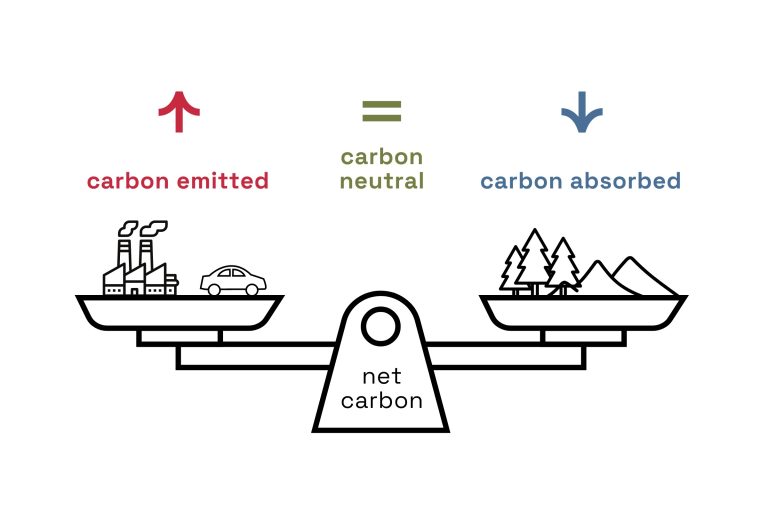
Carbon neutral: To be carbon neutral means there is an equal balance between the amount of carbon emitted and the amount of carbon absorbed. Essentially, it means offsetting emissions through various means, such as purchasing carbon offsets.
Net zero: Net zero refers to having no net carbon emissions in the atmosphere. This is a broader and more ambitious target that aims to align with the IPCC global warming limit of 1.5°C. Net zero involves significant reductions in greenhouse gas (GHG) emissions and often includes activities aimed at both reducing and removing GHGs from the atmosphere.
The difference between carbon neutral and net zero
While net zero and carbon neutral are overlapping concepts, the primary difference is the use of compensated emissions to achieve carbon neutrality. For instance, an organisation can measure its carbon emissions, purchase carbon offsets, and balance emission output. There is no actual reduction of carbon emissions.
Net Zero is a target standard set and governed by the Science Based Targets Initiative. There are more requirements than becoming carbon neutral, broken into three ‘scopes’ that are outlined below. Net Zero targets require 90% of emissions to be reduced, and not just offset, across scopes 1, 2 and 3. Carbon neutrality is only needed for scope 1 and 2, with scope 3 emissions not compulsory.
- Scope 1: Direct emissions from owned or controlled sources.
- Scope 2: Indirect emissions from the generation of purchased electricity, steam, heating, and cooling.
- Scope 3: All other indirect emissions that occur in a company’s value chain.
While net zero targets are primarily on a country, international union or global scale to meet the IPCC warming limit, carbon neutrality can be measured down to an individual or product. Carbon markets are a whole other topic, but they facilitate the trading of carbon offsets to help balance emissions. They play a crucial role in achieving both carbon neutrality and net zero, though their role is more emphasised in the context of carbon neutrality.
Breaking down some terms
There are many terms used for naming and describing emission processes, but they often have a similar meaning. We’ve broken down some terms below.
Carbon is a chemical element, a compound in key greenhouse gases (GHGs) including carbon dioxide (CO2), methane (CH4), hydrofluorocarbons (HFCs) and perfluorocarbons (PFCs).
GHGs, such as CO2, being released into the atmosphere. Often measured by the volume of GHGs in a specific area, over a period of time.
Describes the process/flow of gas when an activity, physical object or event removes GHGs from the atmosphere.
Anything that releases more GHGs into the atmosphere than it absorbs, for example a volcanic eruption or the burning of fossil fuels.
Anything that absorbs more carbon from the atmosphere than it releases, for example soil or oceans.
Capture traps GHGs from the atmosphere. Carbon capture technology, such as carbon capture and storage (CCS), traps, treats and stores carbon from the source. Carbon capture technologies are capable of capturing 90% of CO2 emissions from industrial facilities and power plants.
More specific than absorption, carbon sequestration is the process of storing carbon in a natural carbon sink, such as soil.
The role of land
The land, including vegetation, soil and water bodies are all natural carbon sinks. Optimising practices to restore these sinks such as woodland creation, peatland restoration and sustainable agriculture help landowners tap in to the benefits of carbon revenue, while also benefitting nature, climate and communities on a local and global scale. Individuals and organisations in land management can measure carbon neutrality and reduce emissions in line with policy, with help from standards such as the UK Woodland Carbon Code and IUCN UK Peatland Code.
Wondering what opportunities are available on your land? That’s when the Rethink Platform steps in:
The automated land management platform for restoring nature and unlocking new revenue streams.
References
Carbon Trust, Net Zero: What businesses need to know
Centre for Climate and Energy Solutions, Carbon Capture
European Commission, Glossary: Carbon Dioxide Emissions
IPCC, Climate Change 2022
Natural History Museum, What does carbon neutral mean and what is net zero?
United Nations, For a livable climate: Net-zero commitments must be backed by credible action